
Introduction
Modern culture has weaponized a single phrase from the Sermon on the Mount. "Judge not, that ye be not judged" has become a universal shield against moral evaluation, a conversation-ending trump card hurled at anyone who dares declare right from wrong. This misreading has not merely saturated the surrounding culture. It has colonized the church itself, producing a generation of professing Christians who have elevated tolerance to the status of supreme virtue and repackaged cowardice as compassion.
This is not a minor theological misunderstanding. It is a catastrophic inversion of the biblical witness, and it has consequences measured in souls.
The consistent testimony of Scripture from Genesis to Revelation is that righteous judgment and discernment are not optional spiritual accessories for the particularly bold. They are duties. They are commands. They are the mechanism by which the church protects the innocent, restores the wayward, exposes the predatory, and maintains the integrity of the covenant community.
The prohibition throughout Scripture is never against judgment itself. It is always and only against hypocritical, self-righteous, and unrighteous judgment.
Refusing to judge when judgment is required is not humility. It is not grace. It is not love. It is spiritual cowardice dressed in the language of the Sermon on the Mount, and it will be answered for.
This article examines the biblical case for judgment, drawing from the words of Jesus in the Gospels and the testimony of the Old Testament. The evidence is not ambiguous. It is overwhelming, consistent, and demanding of a response.
The Misunderstood Text
The verse most frequently deployed to silence moral evaluation is Matthew 7:1. "Judge not, that ye be not judged." Stripped from its context and wielded as a conversation-stopper, it appears to command a complete moratorium on moral assessment. This reading is not merely incomplete. It is a misreading so severe that it contradicts the very passage it claims to cite.
Consider what Jesus actually says in the verses that follow:
"For with what judgment ye judge, ye shall be judged: and with what measure ye mete, it shall be measured to you again. And why beholdest thou the mote that is in thy brother's eye, but considerest not the beam that is in thine own eye? Or how wilt thou say to thy brother, Let me pull out the mote out of thine eye; and, behold, a beam is in thine own eye? Thou hypocrite, first cast out the beam out of thine own eye; and then shalt thou see clearly to cast out the mote out of thy brother's eye."
Matthew 7:2–5Read that final sentence again carefully. Jesus does not say to ignore the mote in your brother's eye. He does not suggest the mote is a matter of personal interpretation. He does not counsel you to mind your own business and let your brother live his truth. He prescribes a sequence: first remove the beam from your own eye, and then you will see clearly enough to remove the mote from your brother's eye. The entire passage assumes the mote must be removed. The brother needs intervention. Judgment will occur. Jesus regulates its manner, forbidding hypocrisy, not its necessity.
The Greek term krinō in Matthew 7:1 carries the sense of passing sentence or condemning rather than simple discernment. Jesus forbids a mode of judgment — one that is condemnatory, hypocritical, and self-exalting. He does not forbid the act of judgment itself. To read Matthew 7:1 as a prohibition on all moral evaluation is to make Jesus contradict Himself within the same paragraph.
This interpretation is confirmed definitively just fourteen verses later. Matthew 7:15–16 declares: "Beware of false prophets, which come to you in sheep's clothing, but inwardly they are ravening wolves. Ye shall know them by their fruits." You cannot identify a false prophet without making a judgment about his character, his doctrine, and his fruit. Discernment is not merely permitted here. It is commanded. And the stakes are not trivial. These are wolves. They are inside the flock. The failure to judge them is not tolerance. It is abandonment of the sheep.
The Command to Judge
If any doubt remained after Matthew 7, Jesus eliminates it in John 7:24 with a command so direct it should end the debate entirely.
Judge not according to the appearance, but judge righteous judgment.
John 7:24Examine the construction carefully. The first clause, mē plus the present imperative, forbids a continuous practice: stop judging by appearances. The second clause commands an alternative with equal grammatical force: keep judging, habitually and consistently, with righteous judgment. The present imperative krinēte indicates not a one-time act but an ongoing, cultivated lifestyle of discernment. This is not a suggestion offered to the spiritually advanced. It is a command issued to disciples.
Jesus does not say "judge if you feel comfortable doing so" or "judge only in extreme circumstances." He says judge. He assumes His people will judge. He demands only that they do it righteously, by God's revealed standard rather than by superficial appearance, social status, or personal preference.
The Christian who refuses to judge on the grounds of Matthew 7:1 is not obeying Jesus. He is selectively quoting Jesus while ignoring Jesus. That is precisely the kind of hermeneutical manipulation Jesus condemned in the Pharisees.
The Process of Judgment
Jesus does not merely command judgment in the abstract. He constructs a detailed institutional procedure for it in Matthew 18, leaving no room for the claim that judgment is a private matter between the individual and God.
"Moreover if thy brother shall trespass against thee, go and tell him his fault between thee and him alone: if he shall hear thee, thou hast gained thy brother. But if he will not hear thee, then take with thee one or two more, that in the mouth of two or three witnesses every word may be established. And if he shall neglect to hear them, tell it unto the church: but if he neglect to hear the church also, let him be unto thee as an heathen man and a publican."
Matthew 18:15–17This is a four-stage judicial process with escalating consequences. Private confrontation. Witnessed confrontation. Ecclesial judgment. Excommunication. Every stage requires evaluation, discernment, and moral judgment. The command "tell him his fault" uses elegxon, the aorist imperative of elegchō, meaning to expose, convict, and reprove. This is not a gentle suggestion to share your feelings. It is a command to confront sin directly and specifically.
The final stage is the most demanding. "Let him be unto thee as an heathen man and a publican" is a verdict. It is the church acting as a judicial body, rendering a judgment with real spiritual and communal consequences. Jesus does not apologize for this. He does not soften it. He commands it.
Notice what this passage destroys. It destroys the notion that confronting sin is unloving. The entire purpose of this process is restoration. "Thou hast gained thy brother." Judgment here is an act of love so serious that it refuses to leave a brother in his sin unchallenged. The church that will not judge is not a loving church. It is a church that has decided its own comfort matters more than the souls of its members.
The Duty of Rebuke
Jesus states the obligation with characteristic directness in Luke 17:3.
"Take heed to yourselves: If thy brother trespass against thee, rebuke him; and if he repent, forgive him."
Luke 17:3The command is unambiguous. Rebuke him. Not "consider whether rebuking him might be appropriate given the cultural context." Not "pray about whether the Spirit is leading you to address this." Rebuke him. This is impossible without first making a judgment that a trespass has occurred, that it is serious enough to address, and that the brother needs to hear it.
The sequence Jesus establishes is critical: judgment precedes rebuke, rebuke precedes repentance, repentance precedes forgiveness. The modern church has attempted to collapse this sequence by offering forgiveness without requiring repentance and extending grace without naming sin. This is not the pattern Jesus commands. It is a distortion of it that robs the offender of the very confrontation that might lead to his restoration.
Silence in the face of a brother's sin is not grace. It is a failure of love that Jesus explicitly commands against.
The Necessity of Wisdom
Jesus sends His disciples into hostile territory with this instruction:
"Behold, I send you forth as sheep in the midst of wolves: be ye therefore wise as serpents, and harmless as doves."
Matthew 10:16Wisdom of this kind is not passive. It requires constant, active judgment of every situation and every person encountered. You must evaluate who is wolf and who is sheep. You must assess when to speak and when to withdraw. You must judge the motives of those who oppose you, the sincerity of those who welcome you, and the spiritual condition of the communities you enter. This is not optional caution for the particularly discerning. It is commanded survival for every disciple sent into the world.
The Christian who refuses to make these judgments on principle is not being harmless as a dove. He is being naive as a lamb walking willingly into the slaughter. Jesus commands wisdom precisely because the world contains wolves who depend on the church's unwillingness to identify them.
The Example of Jesus
The most devastating refutation of the "judge not" ethic is not a theological argument. It is the conduct of Jesus Himself. If any form of moral evaluation were forbidden, Jesus would be the greatest violator of His own teaching. Instead, He models what righteous judgment actually looks like: truthful, specific, severe when severity is warranted, and entirely unconcerned with the approval of His audience.
| Matthew 12:34 | To the Pharisees: "O generation of vipers, how can ye, being evil, speak good things?" He does not say they have made some theological errors requiring gentle correction. He calls them vipers and states explicitly that they are evil. |
| Matthew 23 | He pronounces seven consecutive woes upon the scribes and Pharisees, calling them hypocrites each time. He compares them to whited sepulchres, beautiful on the outside and full of dead men's bones within. He does not offer this as one possible interpretation of their conduct. He declares it as fact. |
| Matthew 23:33 | He asks them directly: "Ye serpents, ye generation of vipers, how can ye escape the damnation of hell?" He raises the question of their eternal destiny and implies the answer is that they cannot. |
| John 8:44 | Speaking to Jews who disputed His teaching: "Ye are of your father the devil, and the lusts of your father ye will do." He does not say they have been influenced by devilish thinking. He assigns their spiritual paternity to Satan. |
| Luke 13:32 | He calls Herod a fox — a characterization of cunning predation directed at a political ruler with the power to kill Him. |
| Matthew 16:23 | Even to Peter: "Get thee behind me, Satan: thou art an offence unto me: for thou savourest not the things that be of God, but those that be of men." He calls His own chief disciple Satan for opposing the plan of God, and He does it publicly. |
This is not a series of isolated outbursts. It is a consistent pattern of righteous judgment applied without apology to individuals, groups, and institutions. Jesus evaluates hearts, names sin, assigns moral character, and employs severe language when the situation demands it. He does this while being the only sinless man who ever lived, the one person who had the right to cast the first stone, and He does not hesitate.
The Christian who refuses to name sin, who softens every rebuke into a suggestion, who prefaces every correction with so many qualifications that the correction disappears, is not following the example of Jesus. He is following a domesticated version of Jesus invented by a culture that finds the real one too uncomfortable.
The Old Testament Foundation
The command to judge righteously does not originate with the New Testament. It is woven into the fabric of the Law and the Prophets as a fundamental obligation of covenant faithfulness.
"Ye shall do no unrighteousness in judgment: thou shalt not respect the person of the poor, nor honour the person of the mighty: but in righteousness shalt thou judge thy neighbour."
Leviticus 19:15God commands His people to judge their neighbors. The only requirement is that it be done righteously and without favoritism. The command to judge is assumed. The question is only whether it will be done with integrity.
"Hear the causes between your brethren, and judge righteously between every man and his brother, and the stranger that is with him."
Deuteronomy 1:16God charges His appointed leaders to judge righteously. Judgment is not a regrettable necessity to be minimized. It is a God-ordained responsibility assigned to those in positions of authority.
As seen in the True Vineyard study app's character profiles, Moses carries 82 textual connections spanning the very legal traditions cited above.
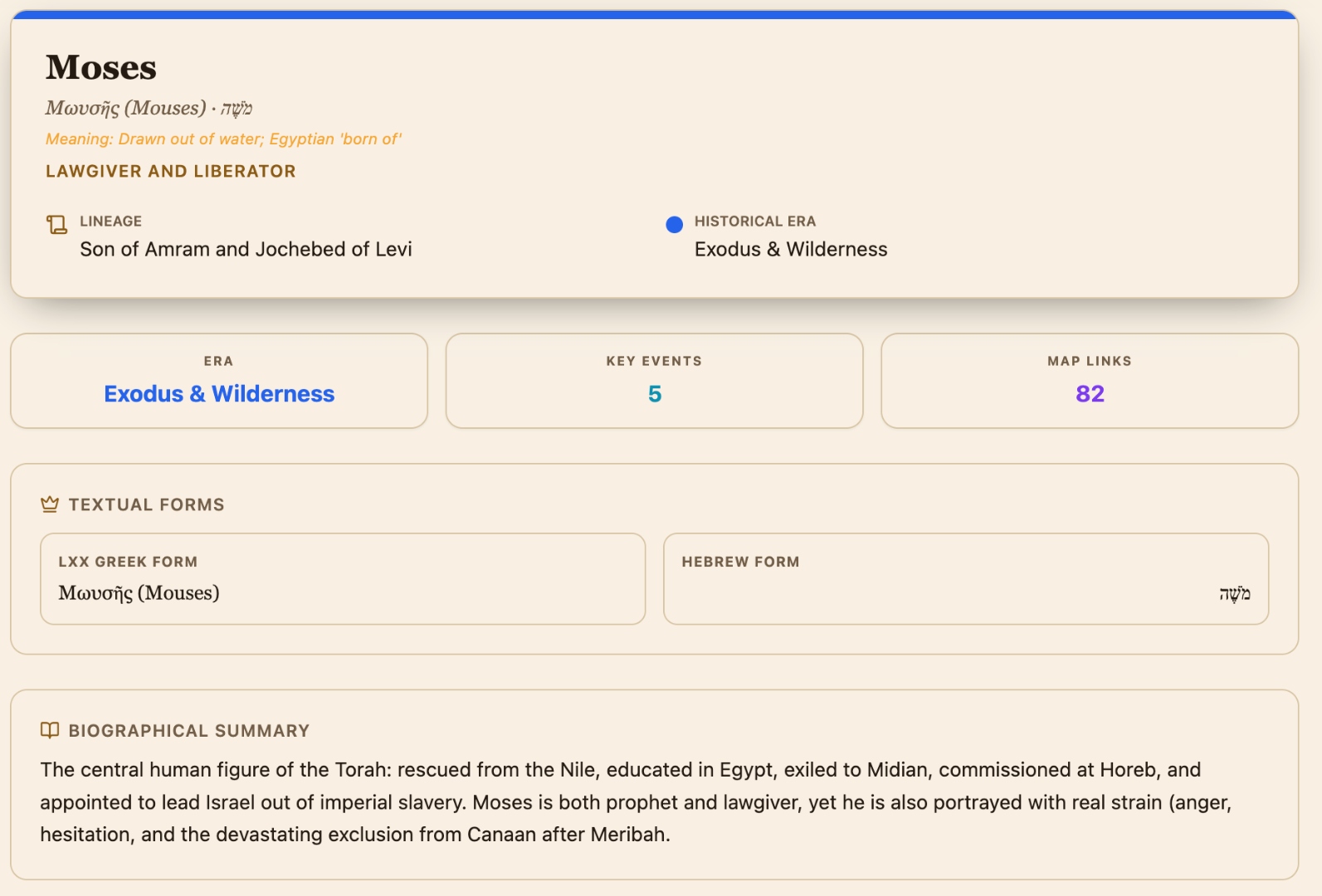
Moses — Lawgiver & Liberator · LXX: Μωυσῆς · 82 textual connections · True Vineyard App
"Open rebuke is better than secret love."
Proverbs 27:5The man who loves you enough to rebuke you openly is demonstrating greater love than the man who keeps his concerns to himself to preserve the relationship. Silence, in this framework, is not kindness. It is a lesser form of love masquerading as consideration.
"He that rebuketh a man afterwards shall find more favour than he that flattereth with the tongue."
Proverbs 28:23The one who rebukes is ultimately more valued and more trusted than the one who flatters. The culture that despises rebuke and rewards flattery is not a culture that values truth. It is a culture that has chosen comfort over integrity, and it will pay for that choice.
"Open thy mouth, judge righteously, and plead the cause of the poor and needy."
Proverbs 31:9This is a direct command to open the mouth and judge. There is no hedging here, no cultural qualification, no suggestion that this applies only to official judges in formal settings. Open your mouth. Judge righteously. The silence of those who know the truth and withhold it is a failure of this command.
"Learn to do well; seek judgment, relieve the oppressed, judge the fatherless, plead for the widow."
Isaiah 1:17God commands His people to actively seek out judgment as an expression of righteousness. Judgment here is not a last resort. It is something to be pursued, learned, and practiced as a discipline of covenant faithfulness.
"When I say unto the wicked, Thou shalt surely die; and thou givest him not warning, nor speakest to warn the wicked from his wicked way, to save his life; the same wicked man shall die in his iniquity; but his blood will I require at thine hand. Yet if thou warn the wicked, and he turn not from his wickedness, nor from his wicked way, he shall die in his iniquity; but thou hast delivered thy soul."
Ezekiel 3:18–19This passage must be read with full seriousness. God is not speaking here of professional prophets in a unique historical office. He is articulating a principle of moral accountability that applies to everyone who knows the truth. If you see the wicked in his wickedness and you do not warn him, his blood is on your hands. You are not a neutral bystander who stayed out of it. You are complicit. You are guilty. The man who refuses to judge because he fears being called judgmental has not avoided responsibility. He has incurred it.
The one who warns the wicked and is ignored has delivered his own soul. He has done what was required. The outcome belongs to God. But the warning must be given. The judgment must be spoken. Silence is not an option that leaves your hands clean.
"Execute true judgment, and shew mercy and compassions every man to his brother."
Zechariah 7:9God commands the execution of true judgment alongside mercy and compassion. These are not opposites. They are companions. The mercy that refuses to judge is not mercy at all. It is indifference wearing mercy's clothing. True compassion tells the truth, even when the truth is hard, because it is more concerned with the other person's actual condition than with its own comfort.
Additional Gospel Evidence
The case does not rest on a handful of proof texts. The pattern of commanded discernment runs throughout the Gospel accounts.
Jesus rebukes the multitudes for their failure to exercise spiritual discernment:
"Ye hypocrites, ye can discern the face of the sky and of the earth; but how is it that ye do not discern this time?"
Luke 12:54–56He does not say discernment is difficult or that they should not attempt it. He calls their failure hypocrisy. They possess the capacity to judge. They are choosing not to apply it to the things that matter most. That choice is not neutral. It is condemned.
Jesus judges the Pharisees' hearts and their theological methodology, applying Isaiah's prophetic condemnation directly to living men standing in front of Him:
"Well hath Esaias prophesied of you hypocrites… Full well ye reject the commandment of God, that ye may keep your own tradition."
Mark 7:6–9He does not restrict Himself to addressing abstract principles. He names the people, identifies the sin, and applies the prophetic verdict. This is righteous judgment in practice.
"For the Father judgeth no man, but hath committed all judgment unto the Son… and hath given him authority to execute judgment also, because he is the Son of man."
John 5:22, 27All judgment has been entrusted to Christ. Judgment is a divine function. The church, as the body of Christ in the world, participates in this function when it judges righteously. To refuse judgment is not humility before God. It is a refusal to exercise the authority and responsibility He has delegated.
What Is Actually Prohibited
Scripture does not prohibit judgment. It prohibits the corruption of judgment, and the distinction matters enormously because the corruptions are real and the warnings against them are serious.
Hypocritical judgment is forbidden. The man with a beam in his own eye who rushes to correct the man with a mote is not practicing righteous judgment. He is practicing self-righteousness disguised as concern. Self-examination is not optional preparation for correction. It is the prerequisite without which correction becomes an exercise in pride.
Judgment by appearances is forbidden. Superficial evaluation based on looks, reputation, social status, or first impressions violates the standard of righteousness. John 7:24 forbids it explicitly. Righteous judgment requires looking past the surface to the substance.
Partial judgment is forbidden. Favoring the powerful over the weak, the wealthy over the poor, the popular over the obscure corrupts justice at its foundation. Leviticus 19:15 forbids it. God is no respecter of persons, and neither may His people be.
Malicious contempt is warned against. The warning in Matthew 5:22 against calling a brother "Raca" or "fool" in a spirit of empty denigration is real and serious. There is a judgment that proceeds from hatred, from the desire to destroy rather than restore, from contempt for the person rather than opposition to the sin. This is condemned.
But here is what must be understood clearly: every one of these prohibitions assumes that judgment will occur. They regulate its manner. They purify its motivation. They do not and cannot abolish its necessity. The man who uses these prohibitions as reasons to never judge has not obeyed the restrictions on judgment. He has used the restrictions to escape judgment entirely, which is precisely what the restrictions were never designed to permit.
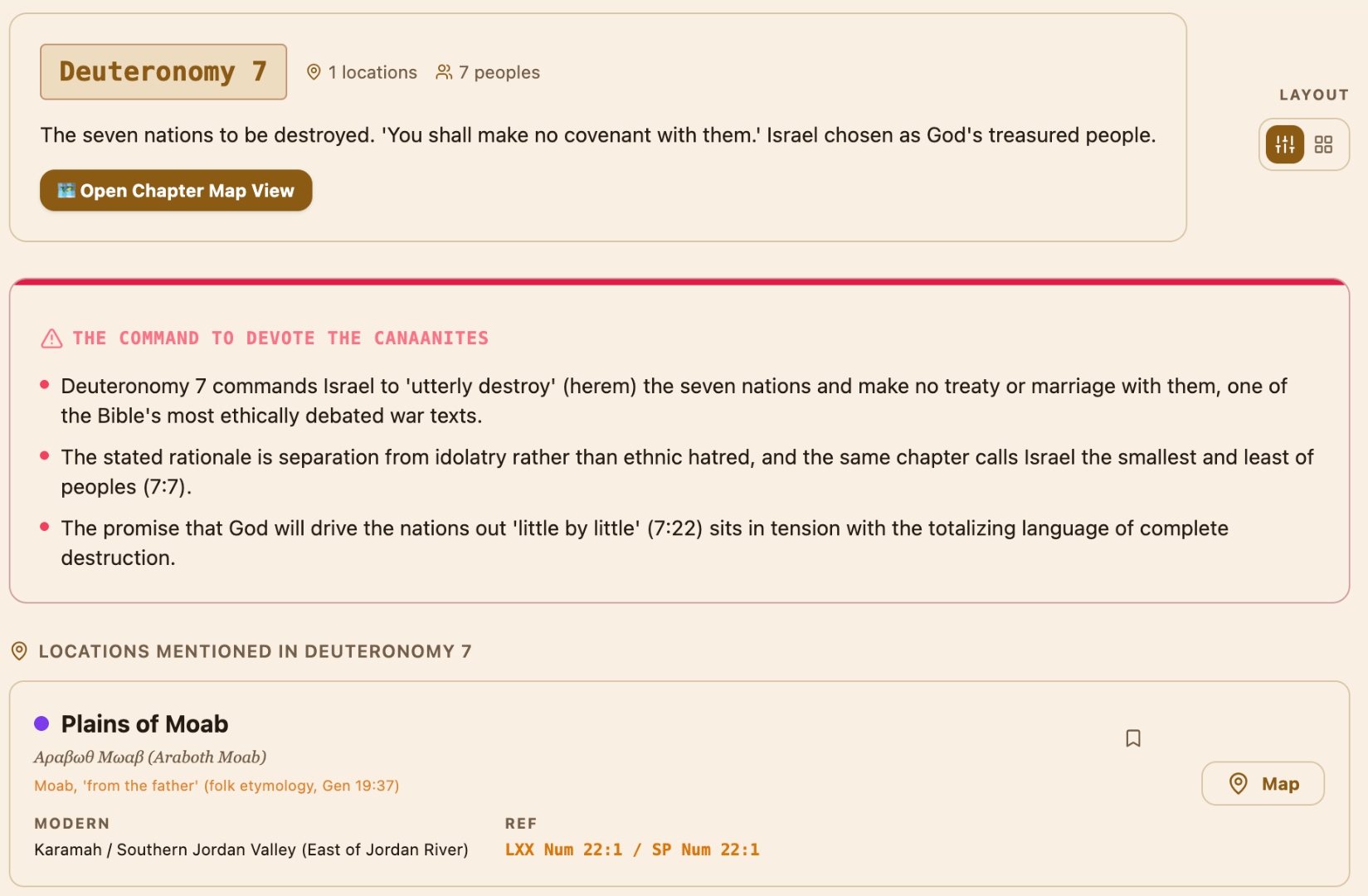
Deuteronomy 7 — “The seven nations to be destroyed” · Scripture Tensions & Notes · True Vineyard App
The Consequences of Silence
Ezekiel's watchman passage is not a metaphor for a distant historical situation. It is a covenant principle with present application, and its terms are severe.
The watchman who sees the sword coming and does not blow the trumpet has not stayed neutral. He has chosen a side. He has chosen his own comfort, his own reputation, his own desire to avoid conflict over the lives of the people he was appointed to protect. God's verdict is unambiguous: their blood is on his hands.
The modern "judge not" ethic produces exactly this kind of watchman. He stands on the wall. He sees the wolves. He knows the false teaching. He recognizes the unrepentant sin. And he says nothing, because he has been told that saying something would be judgmental, unloving, divisive, or unkind. He has baptized his silence with the language of grace and called his cowardice a spiritual virtue.
This is not abstract theology reserved for professional clergy. Every believer who knows the truth and withholds it when it is needed, every Christian who watches a brother walk into destruction and says nothing to preserve the peace, every church leader who refuses to name false teaching because the congregation might be upset, stands in the position of Ezekiel's faithless watchman.
The sword is coming. The trumpet must be blown. Silence is not an option that God will excuse.
Conclusion
The biblical command is not "suspend judgment." It is "judge righteous judgment." Jesus assumes judgment is inescapable and necessary. He commands it in John 7:24. He models it throughout His ministry with a severity that would get Him disinvited from most modern evangelical conferences. He institutionalizes it in Matthew 18 with a four-stage judicial process that ends in excommunication. He requires it in Luke 17:3 as the prerequisite for forgiveness. He demands it in Matthew 10:16 as the condition of survival in a world full of wolves.
The Old Testament speaks with one voice on this question. Judge righteously. Rebuke openly. Warn the wicked. Seek judgment. Execute true judgment. Open your mouth. The silence of those who know the truth is not neutrality. It is failure, and it carries consequences measured in blood.
The modern inversion of Matthew 7:1 has produced a church that cannot identify false teachers because it has decided that identification is unkind. It cannot confront sin because it has decided that confrontation is unloving. It cannot protect the flock because it has decided that protection requires a judgment it is not willing to make. It cannot speak truth to power because it has decided that speaking is divisive. This is not spiritual maturity. It is not grace. It is not love. It is disobedience, and it is costing souls.
You must judge. Not because you are superior, but because you are responsible. Not because you are without sin, but because you have removed the beam and can now see clearly. Not because judgment is pleasant, but because the alternative is the blood of the watchman's silence on your hands.
You must discern. You must test the spirits. You must evaluate the fruits. You must rebuke the brother who trespasses. You must expose the false prophet who comes in sheep's clothing. You must warn the wicked. You must open your mouth.
Do it without hypocrisy. Do it without partiality. Do it without malice. Do it with the goal of restoration and the protection of the innocent. Do it with the beam removed from your own eye and the standard of God's truth as your measure.
Silence is not virtue. Silence is not grace. Silence is not love. Silence is culpable negligence, and the God who required the blood of the silent watchman has not changed His standard.
The watchman who will not warn because he fears being called judgmental has already failed his post. The Christian who will not judge because he prefers the approval of men has already denied his Lord.
Judge not according to the appearance.
Judge righteous judgment.
Dig Deeper with True Vineyard
The figures, laws, and nations behind this article — explore the biblical text and its manuscript connections in the True Vineyard app.
Biblical Figure · Lawgiver
Moses — Lawgiver & Liberator
The architect of Israel's legal code. Author of Deuteronomy's commands to judge righteously — his profile includes LXX Greek and Hebrew name forms, lineage, key events, and map links to every location in his story. One of 538 profiles in the Figures module.
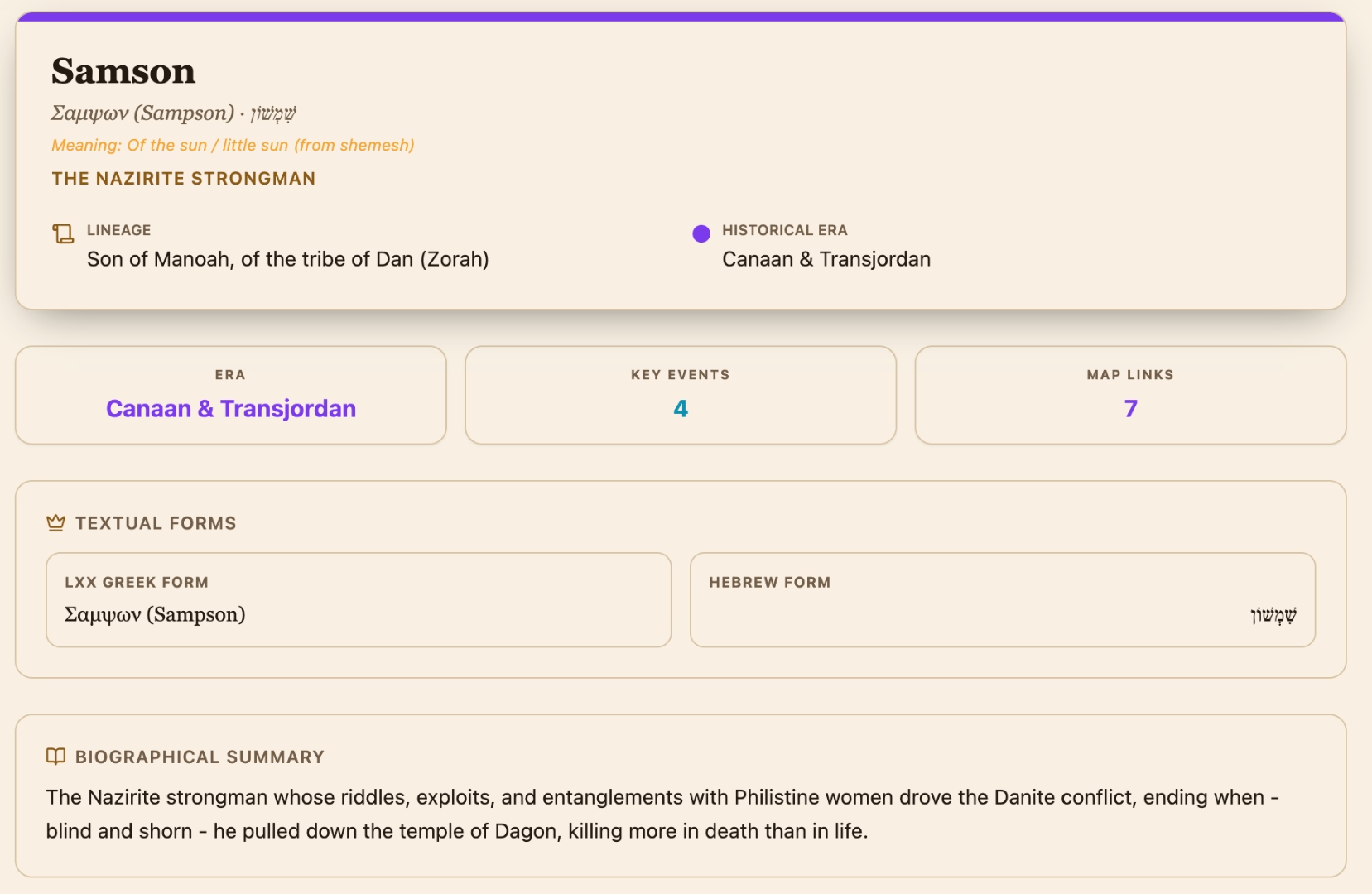
Biblical Figure · Judge
Samson — Nazirite Strongman
LXX: Σαμψων. One of Israel's most dramatic judges — his story spans Canaan and Transjordan. Filter the 538 biblical figures by Story Era to find all 118 figures of the Conquest period, including every judge of Israel.
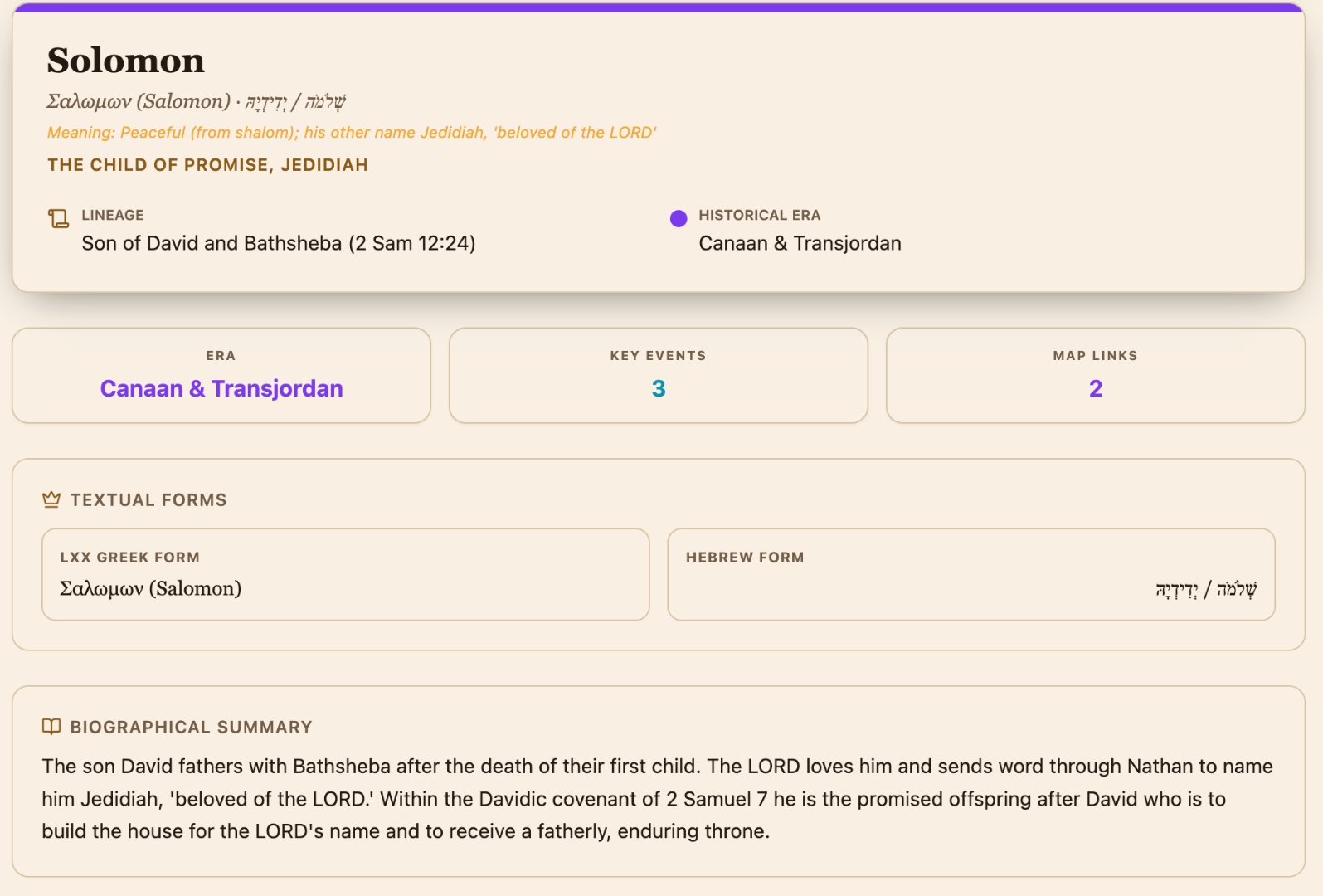
Biblical Figure · Wisdom
Solomon — Child of Promise
LXX: Σαλωμων. Also called Jedidiah, "Beloved of the Lord." His legendary wisdom in judgment — the two mothers and the living child — is the Old Testament's defining portrait of righteous discernment. Part of the 163 Kingdom & Exile era figures.
Scripture Lookup · 1,346 Chapters
Deuteronomy 7 — The Seven Nations
"The Command to Devote the Canaanites." One of 1,346 mapped chapters in Scripture Lookup — with textual tensions, manuscript notes, signs and wonders, NT quotations, and geographic context for one of the Torah's most demanding judgment texts.
People Groups · 59 Nations
The Seven Nations of Canaan
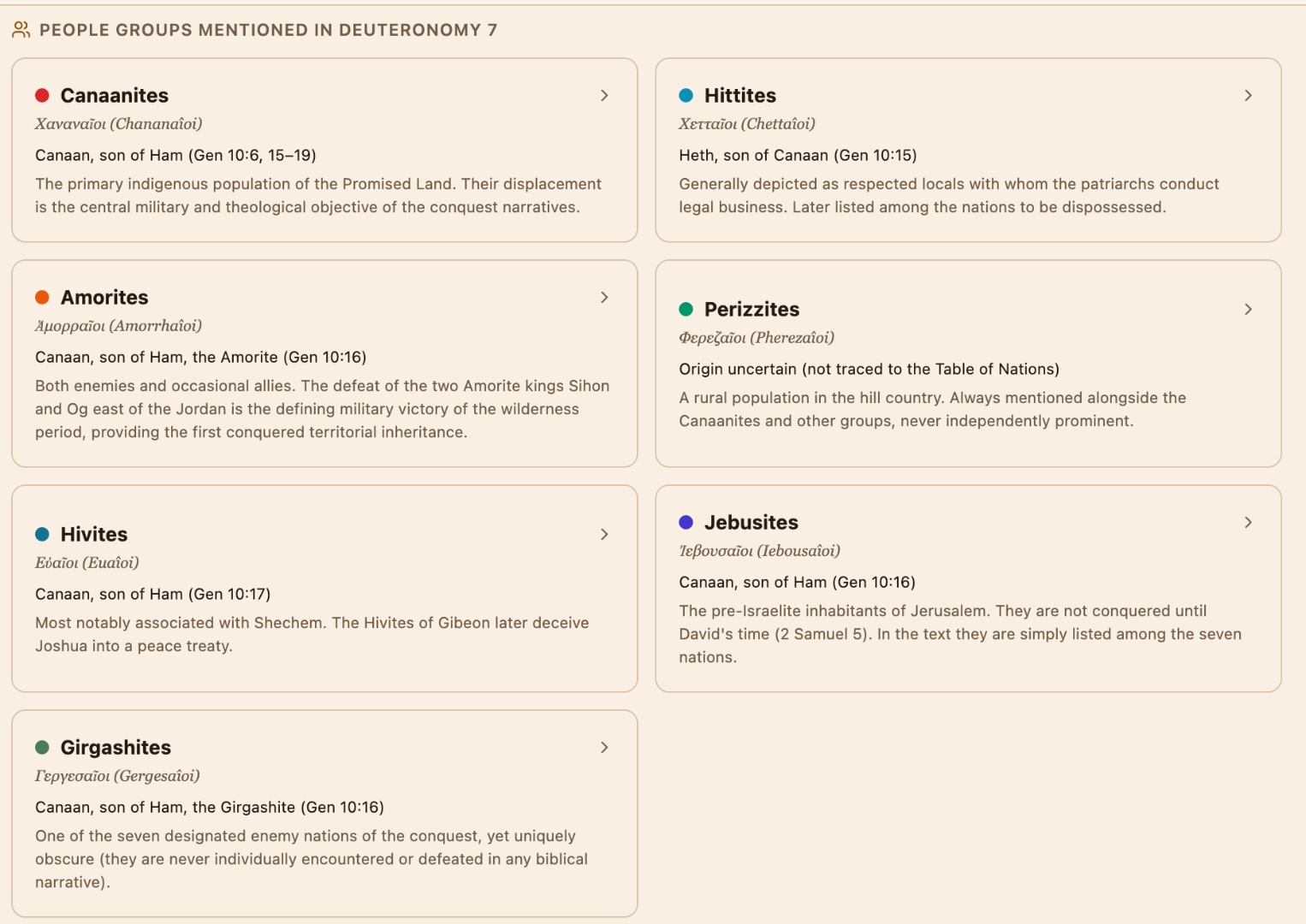
All seven nations named in Deuteronomy 7 — Canaanites, Hittites, Amorites, Perizzites, Hivites, Jebusites, and Girgashites — with LXX Greek names, ancestor/origin, territory, and a "Highlight Territory on Map" button. Part of 59 people group profiles.
Witnesses · Councils & Divisions
The Councils That Shaped Judgment
The Witnesses section catalogs 32 ecumenical councils — each with a reception key showing whether it was Binding, Received, Rejected, Annulled, or Disputed by each communion. Alongside the Divisions module (86 church bodies compared across 19 communions), it shows how the authority to judge has itself been judged across history.
538 biblical figures, 59 people groups, 1,346 chapters, 32 councils — all cross-referenced with the oldest manuscripts. Free, browser-based, no account required.
Open True Vineyard App